

In the context of globalisation, teaching is no longer confined within national borders. Educational institutions, particularly in Europe, the United Kingdom, and OECD countries, are shifting towards a competency-based education model, in which learners’ professional competencies are mapped against National Occupational Standards to ensure compatibility and cross-border recognition (CEDEFOP, 2020).
The Teacher Level 6 framework (OCC0490) in the Occupational Maps of Skills England defines the teaching role as a professional occupation that requires the integration of subject knowledge, pedagogical expertise, and continuous professional development capabilities (Skills England, 2024). According to this framework, teachers at Level 6 are expected to plan and deliver lessons aligned with the national curriculum, assess learner progress, adapt methodologies based on feedback, maintain a safe learning environment, and collaborate effectively with stakeholders such as colleagues, parents, and school leaders.
The Bachelor of Arts in TESOL programme at SIMI Swiss has fully integrated this competency framework, transforming the course into more than just English language teaching training—it is a pathway to becoming an internationally recognised professional teacher. This model aligns with the philosophy of Switzerland’s Truly International™ Higher Education Institute by SIMI Swiss—where programmes are designed according to European standards and aligned with the qualification, competency, and occupational recognition systems of the United Kingdom, enabling graduates to gain widely accepted professional recognition.
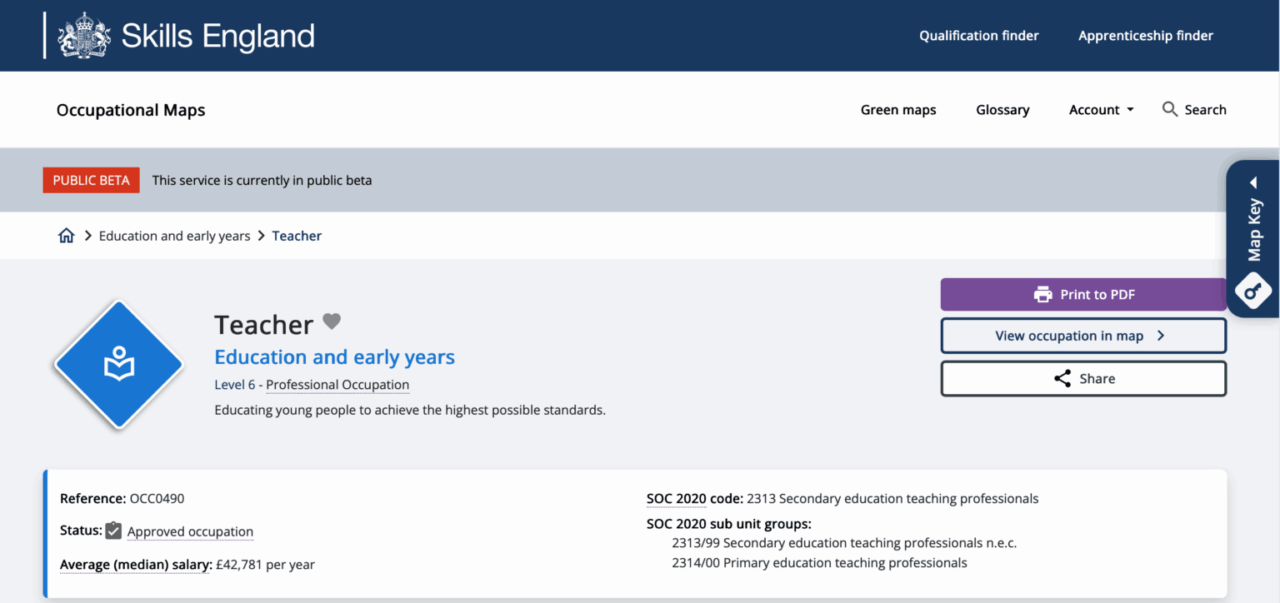
Occupational Description: Teacher Level 6 – Professional Occupation (OCC0490)
According to the UK Government’s Occupational Map for Education and Early Years by Skills England (2024), the Teacher (Level 6) role is a professional occupation under the Professional Occupation category, representing the professional level of teachers within the UK education system.
Scope of Work
Level 6 Teachers work with learners aged 3 to 19 and may also teach adults, in environments such as public schools, academies, private or faith-based schools, and specialist education settings. They are responsible for planning, organising, and delivering high-quality lessons to help learners achieve their best possible outcomes.
Main Roles and Responsibilities
- Teachers at this level are considered Level 6 education professionals—a key professional category in the national education system. Their duties and required competencies include:
- Designing and delivering effective lessons aligned with the curriculum framework.
- Managing student behaviour to maintain a safe, respectful, and positive learning environment.
- Applying modern assessment methods, tracking learner progress, and adapting teaching strategies accordingly.
- Working closely with parents, school leadership, special education professionals, and student support services.
- Fully complying with the Teachers’ Standards – the statutory minimum framework for professional conduct, ethics, and responsibilities of teachers.
Organisational and Professional Development Roles
In daily work, Level 6 Teachers interact with children, young people, parents, and colleagues. They report to subject or year group coordinators and are overseen by the headteacher. Teachers are required to engage in continuous professional development (CPD) to ensure their teaching competence remains aligned with modern educational demands and national policy.
Median Salary and Occupational Classification
- Median salary: £42,781/year (Skills England, 2024)
- SOC 2020 Code: 2313 – Secondary Education Teaching Professionals
- Related Subgroups:
- 2313/99 – Secondary education teaching professionals n.e.c.
- 2314/00 – Primary education teaching professionals
Sustainable Development Orientation
The Teacher Level 6 role is classified under “Supportive of Green Economy,” meaning it contributes to sustainability through resource efficiency, low-emission practices, and environmental education. This role also emphasises “Education for Sustainability and Climate Change,” where teachers guide learners in developing environmental awareness, global citizenship, and sustainable values—fostering a generation capable of contributing to a greener future.
Organisations Involved in Developing the Teacher Level 6 Standard
This competency framework was co-developed by leading UK education organisations, including Cambridgeshire County Council, Teach First, Harris Federation, UCET, South Farnham Educational Trust, Leigh Academies Trust, NASBTT, and various teacher training networks.
The Bachelor of Arts in TESOL at SIMI Swiss goes beyond English language teaching; it fully integrates the Teacher Level 6 professional competency framework from Skills England. This equips learners with comprehensive knowledge, skills, and international standards to become global teaching professionals.
1. International Professional Recognition
Thanks to the integration of the Teacher Level 6 framework, graduates are identified and recognised as professional teachers within international education systems. They are qualified to teach English and related subjects to learners aged 3–19, consistent with the 21st-century teacher standards defined by the OECD (2021). This enables graduates to join international, bilingual, or UK-curriculum schools worldwide without extensive conversion procedures.
2. Flexible Subject Mobility
The Teacher Level 6 framework covers all core pedagogical competencies, such as curriculum design, classroom management, learner assessment, and continuous professional development.
As a result, graduates can transition to teaching other subjects—for example, Mathematics, Physics, or Science—by completing short subject-specific content courses rather than repeating a full teacher-training programme (Department for Education, 2022).
This flexibility broadens graduates’ career options and enhances adaptability across diverse educational environments.
3. Globally Recognised Qualifications
In addition to the Bachelor of Arts in TESOL from SIMI Swiss, students also earn the OTHM Level 6 Diploma in Teaching and Learning—a UK national qualification recognised within the Regulated Qualifications Framework (RQF).
This diploma is academically equivalent to a Bachelor’s degree from public or private universities across the UK and Europe, ensuring that graduates hold both an academic qualification and a nationally recognised teaching credential suitable for global employment or further study.
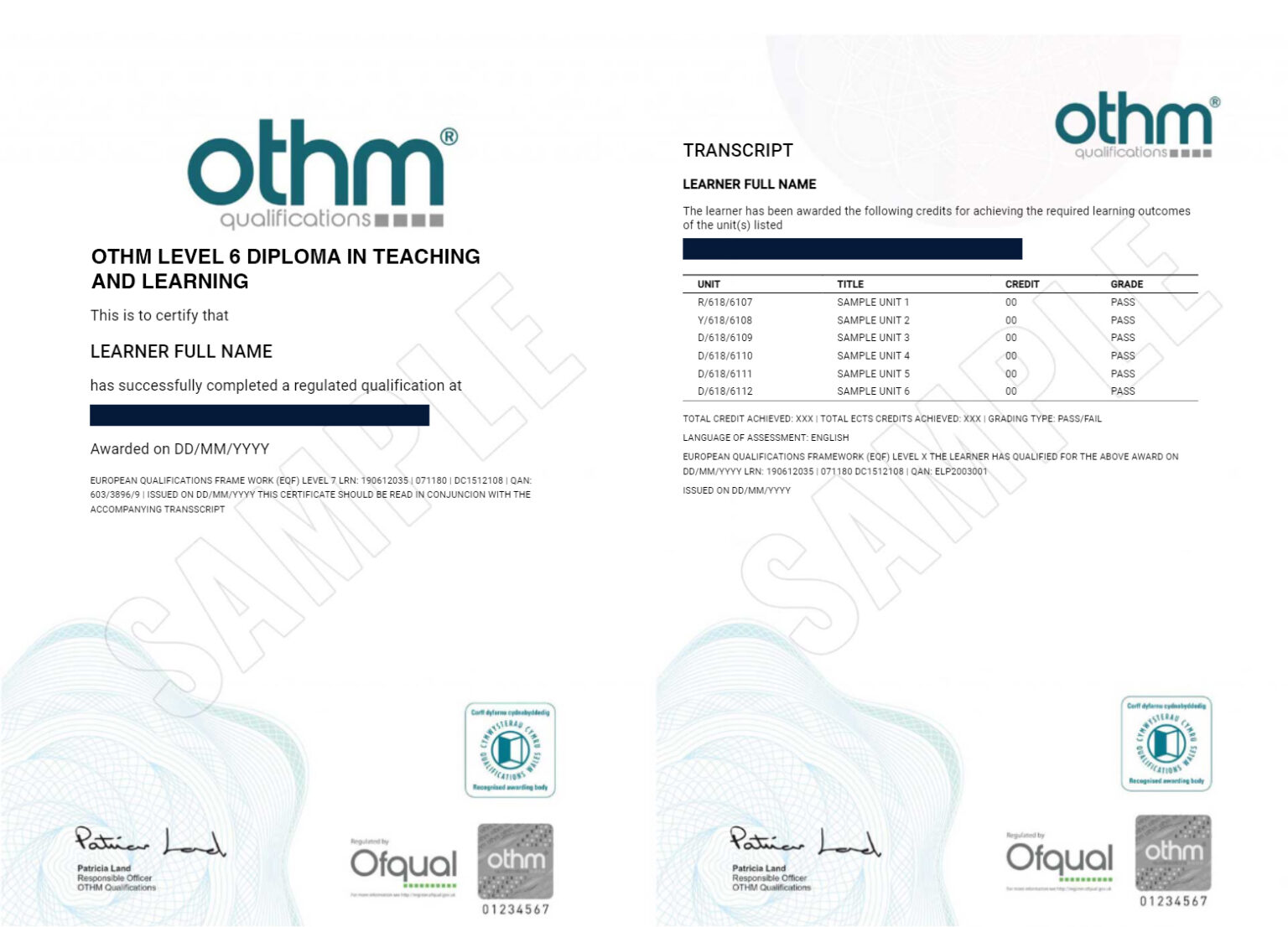
This sample Level 6 Diploma in Teaching and Learning represents the professional qualification integrated into the Bachelor of Arts in TESOL at SIMI Swiss. The qualification is nationally recognised in the UK and equivalent to a Bachelor’s in Education at both public and private universities. The certificate includes the name of SIMI Swiss as an assurance mark.
For You – A TESOL Undergraduate at SIMI Swiss
By enrolling in the Bachelor of Arts in TESOL at SIMI Swiss, you are not only pursuing a degree but also embarking on a journey to become an internationally recognised professional teacher.